Agility Drills for Athletes
Introduction
Agility is a key skill for athletes in almost every sport. It allows you to move quickly, change direction smoothly, and react to sudden movements during competition. Whether you play football, basketball, tennis, or track events, strong agility helps improve overall performance and reduce the risk of injury. Training agility is not just about speed. It involves balance, coordination, reaction time, and body control. Adding the right agility drills to your routine can sharpen these skills and give you a competitive edge.
Why Agility Matters in Sports
Agility plays an important role in both offensive and defensive movements. Athletes often need to dodge opponents, shift direction quickly, or react to unexpected plays. Without proper agility, movements become slower and less controlled, increasing the chance of mistakes or injuries.
Strong agility also improves body awareness. When your muscles and joints respond quickly, you maintain better balance during fast movements. This reduces strain on the knees and ankles, which are common injury areas in sports. Regular agility training helps athletes stay sharp, responsive, and ready for high-pressure situations.
Ladder Drills for Quick Footwork
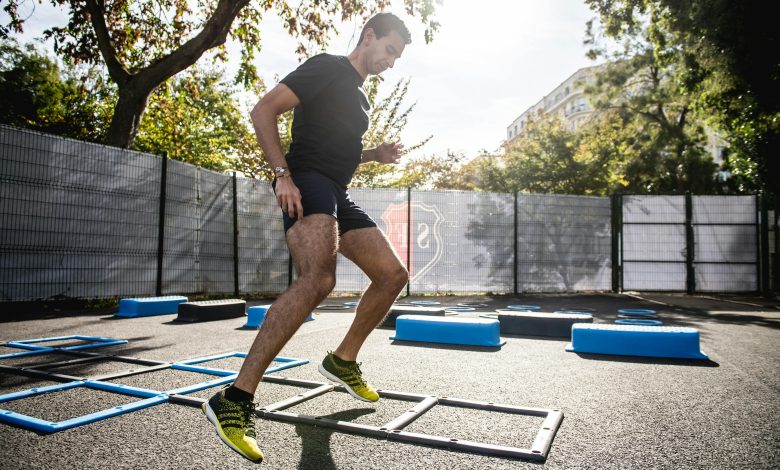
Agility ladder drills are among the most effective exercises for improving foot speed and coordination. These drills involve stepping quickly in and out of ladder squares placed on the ground. They train your feet to move faster while maintaining control.
One simple ladder drill is the one-step run. Step into each square with one foot at a time, moving forward as quickly as possible. Another useful drill is the lateral shuffle, where you move sideways through the ladder. These drills improve rhythm, balance, and reaction time, making them valuable for athletes in fast-paced sports.
Cone Drills for Direction Changes
Cone drills help athletes practice quick turns and sudden direction changes. These movements are common in sports where players must react quickly to opponents or moving objects.
A popular cone drill is the zigzag run. Place cones in a straight line with equal spacing, then sprint and weave between them. Another effective exercise is the T-drill. Arrange cones in the shape of a letter T and run between them following a set pattern. These drills improve acceleration, deceleration, and control during movement transitions.
Plyometric Drills for Explosive Power
Plyometric exercises focus on building explosive strength, which supports faster and more powerful movements. These drills involve jumping and quick bursts of motion that strengthen muscles and improve coordination.
Box jumps are a common plyometric drill. Jump onto a sturdy platform and step down carefully before repeating. Another useful exercise is the lateral hop, where you jump side to side over a small barrier. Plyometric drills strengthen the lower body and increase reaction speed, both of which are important for agility.
Reaction Drills for Faster Responses
Reaction drills train athletes to respond quickly to visual or sound signals. These exercises improve awareness and help athletes make faster decisions during games.
One simple reaction drill involves a partner giving random signals, such as pointing in different directions. The athlete moves quickly in response to each signal. Another option is the ball drop drill, where you catch a falling ball before it hits the ground. These drills sharpen reflexes and improve mental focus.
Tips for Effective Agility Training
Consistency is essential for improving agility. Short, focused sessions performed several times a week produce better results than occasional long workouts. Always warm up before starting drills to prepare muscles and reduce injury risk.
It is also important to maintain proper technique. Moving too fast without control can lead to poor habits or injuries. Start slowly, master the movement pattern, and then increase speed. Wearing proper footwear and training on safe surfaces also supports better performance.
Conclusion
Agility drills are a valuable part of athletic training because they enhance speed, coordination, and reaction time. Exercises such as ladder drills, cone drills, plyometrics, and reaction training help athletes move more efficiently and confidently. By practicing regularly and focusing on correct technique, athletes can improve their performance and reduce injury risk. Strong agility not only boosts physical ability but also builds confidence during competition, helping athletes perform at their best when it matters most.